
People Analytics · London
Marc
Puricelli
I've spent the last ten years in HR across large multinational companies in different industries and markets. I started in core HR, then moved into internal communications and change management before specialising in people analytics. The throughline has always been the same: a passion for technology, a creative instinct, and a deep curiosity about how things work. I'm currently based in London, working in people analytics and compensation at Ralph Lauren, and thinking a lot about how AI can be used effectively in my work and deployed well across the wider HR function.
- People Analytics
- Power BI & Power Platform
- Python & SQL
- AI & HR Transformation
- Workday
We Need Public Ownership of AI Infrastructure
The race for compute is a race for power. Why I believe public ownership of AI infrastructure belongs alongside regulation and taxation.
Read articlePeople Analytics & Reporting
I build the analytics infrastructure that turns HR data into actionable insights for business and HR leaders — headcount planning, attrition models, compensation benchmarking, org health dashboards. I'm good at connecting dots across messy, disconnected systems and finding practical ways forward when the ideal data stack doesn't exist. Using whatever fits the problem — Python, SQL, Power Platform, SharePoint Lists, SQLite, shell scripts — I build custom solutions that get data out of separate sources and into useful dashboards and reports quickly, while still taking data security seriously.
Currently thinking about
How radically must we rethink the way we work to get real productivity gains out of AI? Most early adopters amongst large companies haven't — they added the tool without rethinking the work. Starting everything from scratch is often impossible too. So what are the first genuinely meaningful steps a department such as mine can take?
Communication & Change Management
Before I worked as a data analyst, I spent years writing and producing internal communications content — articles, videos, campaigns, social posts, and employee engagement materials. I still see my data work as fundamentally the same job: reducing complexity into something clearer, simpler, and actually useful. Those years still come in handy when I'm deciding which insights matter, how to frame them, and what different audiences need to understand from a report.
Things I've built
Thames Foot Tunnels iOS App
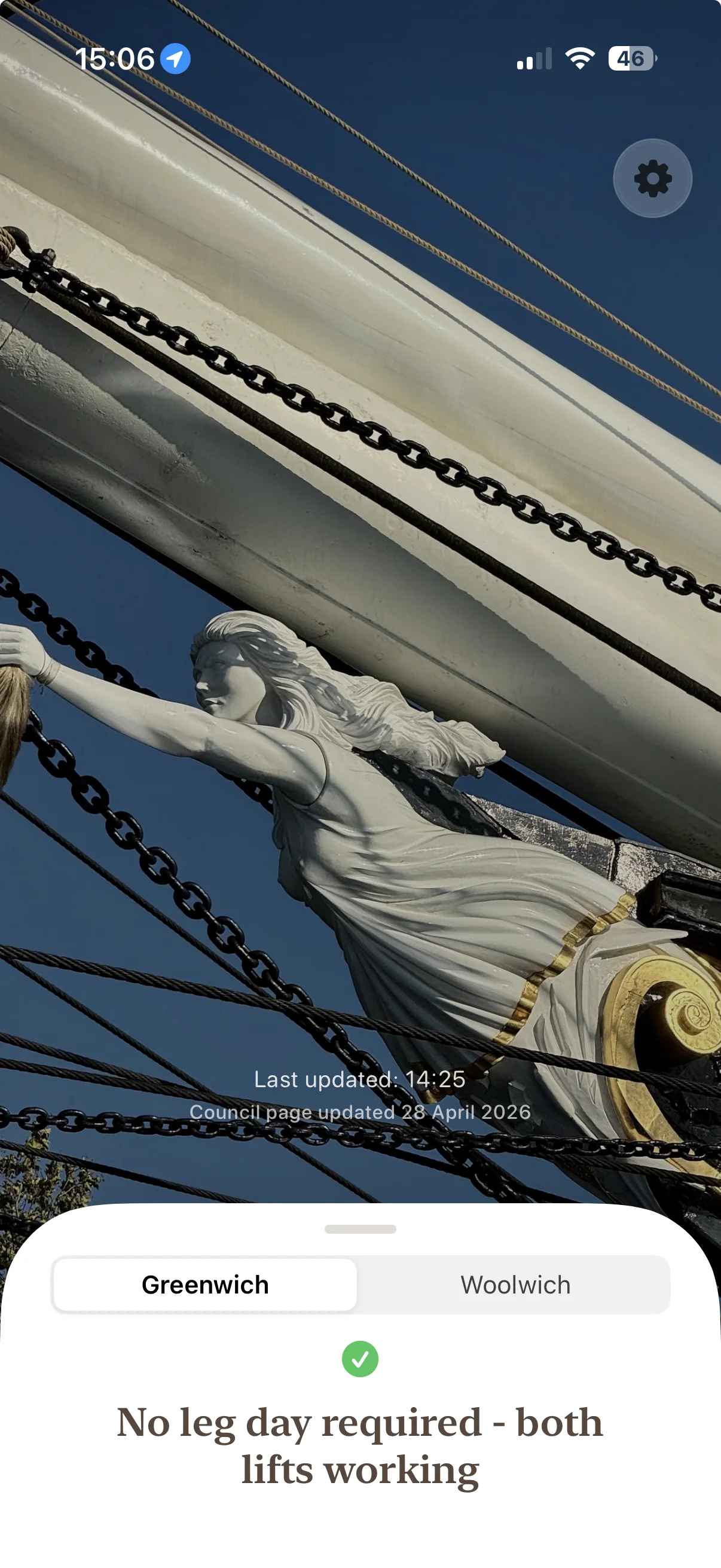
My first iOS app. Version 2 expands from Greenwich to cover the Thames foot tunnels at Greenwich and Woolwich, checking the status of the lifts on both routes in London. It includes Home Screen widgets, status-change notifications, and a watchOS app. Most people can take the stairs, but for cyclists, parents with buggies, and anyone who relies on the lifts, knowing they're down before setting off means taking a different route rather than being turned back on arrival.
I built it with Claude and Codex doing most of the heavy lifting. What I've learned is that a clear vision of the final product, good taste, and consistently high standards still matter a lot. AI can write plenty of code, but imprecise or uninformed prompts can send you down dead ends very quickly, especially when they cut against well-established Swift or SwiftUI conventions.
 02
02
Sports Committee Power App
An internal app I built for Ralph Lauren employees in Geneva and London to browse upcoming sports classes and company activities, sign up or cancel. It uses SharePoint Lists in the backend as a workaround for the lack of a proper database. Not ideal, but it works well and helps dozens of colleagues sign up for classes every week. I rebuilt it from scratch in 2023 with responsive layouts for mobile, tablet, and desktop.
03
Power App · 2026
World Cup Picks
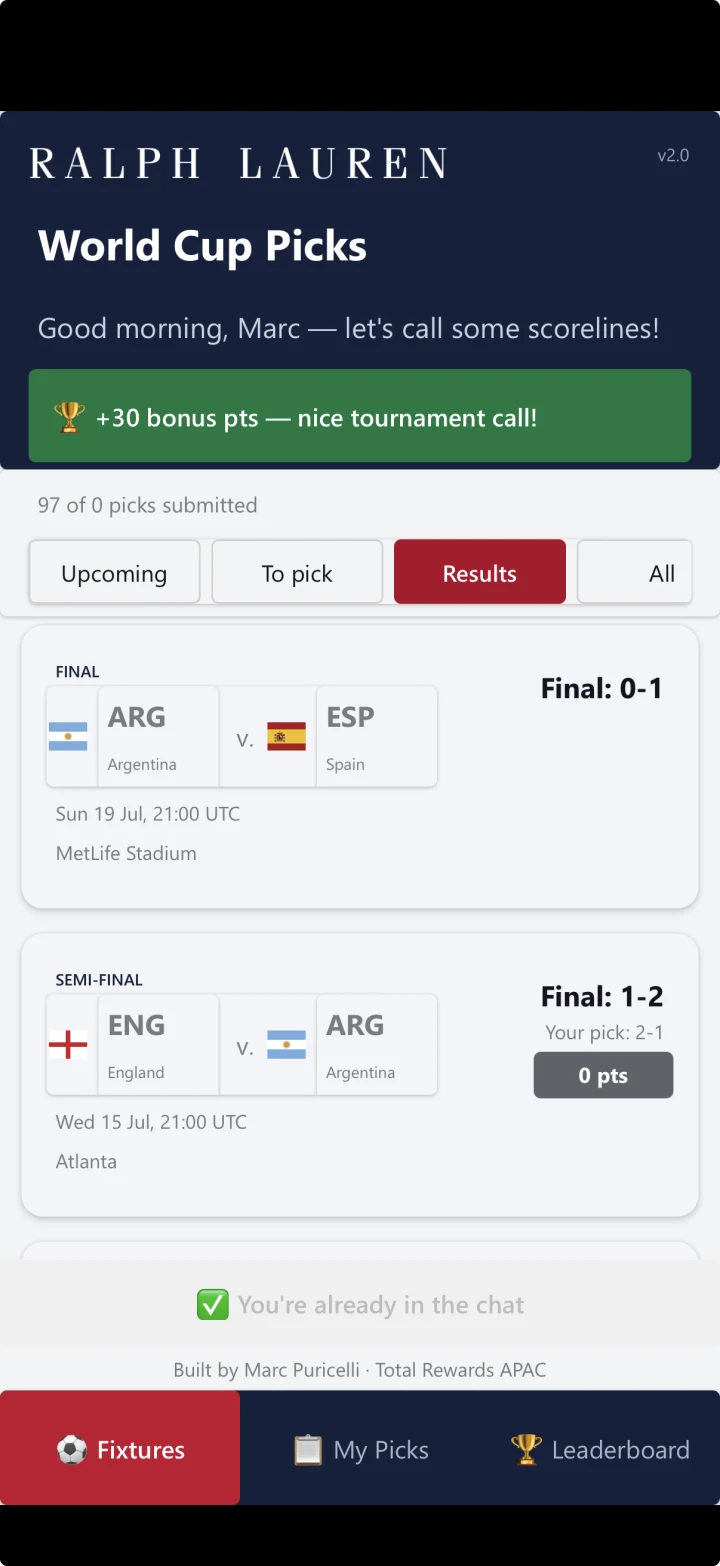
A fun little app I cooked up with Claude Code and Microsoft’s Canvas apps MCP plugin for the 2026 FIFA World Cup. It proved surprisingly popular with my colleagues: close to 80 active users over the course of the tournament, with nearly 4,000 picks submitted.
AI makes it much easier to whip up small apps like this for a particular occasion, while Power Apps remains difficult to beat for integrating them into the wider Microsoft ecosystem.
Areas of focus
Most of my day. I build the reporting, data models, dashboards, and lightweight tools that help HR make use of data spread across a wide mix of systems.
AI has already improved my work in concrete ways, and I'm interested in how these tools can be adopted faster, better, and more usefully across HR. As one of Ralph Lauren’s AI Activators, representing the People team, I get to take part in those conversations — and help turn them into practical changes — every week.
Writing is thinking on paper.William ZinsserWhere I started, and a skill I still use every week. Writing helps turn vague thoughts into something clear and useful. I still draw on that background in communications and change management all the time.